
When Need Became the Mission
HomeEra™ was not developed from a boardroom, a think tank, or a position of comfort. It was developed from lived reality.
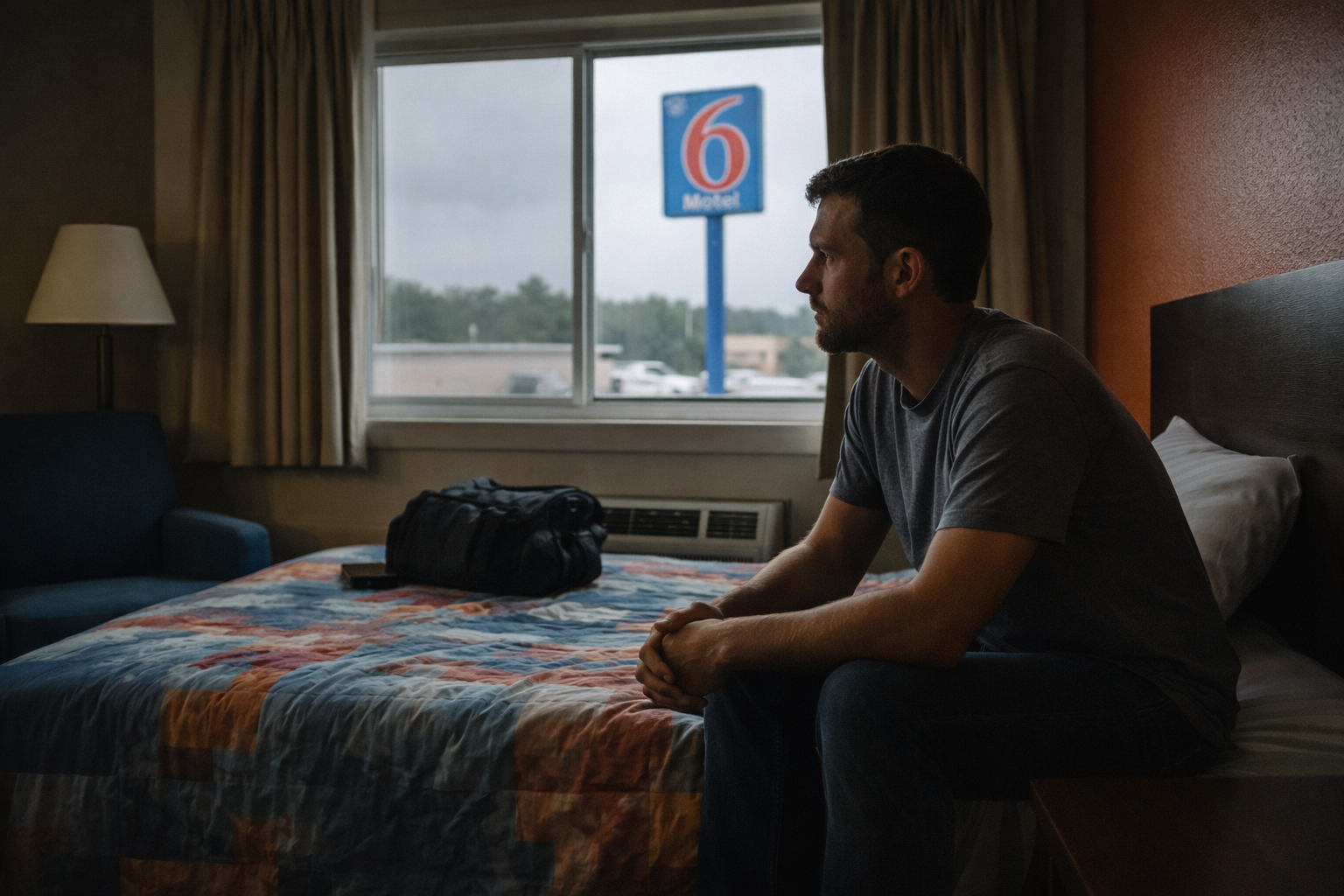
There was a period in my life when I was staying at a Motel 6—not as a temporary inconvenience, but as a circumstance that forced clarity. When you are living in a place designed for short stays, instability becomes tangible. You feel it in the lack of privacy, the uncertainty of tomorrow, and the constant awareness that housing is not guaranteed—it is conditional.
What made that moment different for me was not the hardship itself, but the awareness I carried through it.
I’ve always had an unusual ability to see systems, understand leverage, and recognize where structures fail people—not just financially, but psychologically. Even in that setting, I could clearly see that the issue wasn’t effort, intelligence, or willingness. The issue was access. The issue was structure. The issue was how housing had become transactional rather than foundational.
That realization became the turning point.
From Circumstance to Design
Staying at a Motel 6 while carrying the mind and abilities I have created a sharp contrast:
the gap between what exists and what should exist.
Housing, in practice, had become something people had to qualify for repeatedly—often while already under stress—rather than something that stabilized them so they could rebuild. I saw how many systems were optimized for extraction, not resolution. How temporary solutions quietly became long-term traps.
That is where the idea of HomeEra™ began—not as a “platform,” not as a brand, but as a question:
What would housing look like if it were designed from the perspective of need, dignity, and sustainability rather than profit first?
The Birth of HomeEra™
HomeEra™ was developed as a response to that question.
It began with the belief that housing is infrastructure, not a luxury—and that when people have a place to live, everything else becomes more possible: employment, stability, health, family continuity, and long-term planning.
The mission became clear:
Create a housing company that operates responsibly, acquires property cleanly, and treats shelter as a foundation—not a pressure point.
HomeEra™ is not about fast scaling or speculative promises. It is about disciplined acquisition, responsible stewardship, and building trust—because trust is what was missing when I needed stability the most.
Why This Matters
HomeEra™ exists because I understand housing from both sides:
- From the perspective of someone who has had to rely on temporary shelter
- And from the perspective of someone who understands systems, capital, and execution
That combination matters.
It ensures HomeEra™ is built with empathy without chaos, discipline without detachment, and vision without illusion.
The need became the mission—not as a slogan, but as a permanent design constraint.
The Ongoing Commitment
HomeEra™ is being built in versions for a reason. Each stage must earn the next. Each property must justify expansion. Each decision must remain defensible—not just financially, but ethically.
Because I know what it feels like to need stability—and I know what it takes to build it.
That is how HomeEra™ came to be.
There are no comments