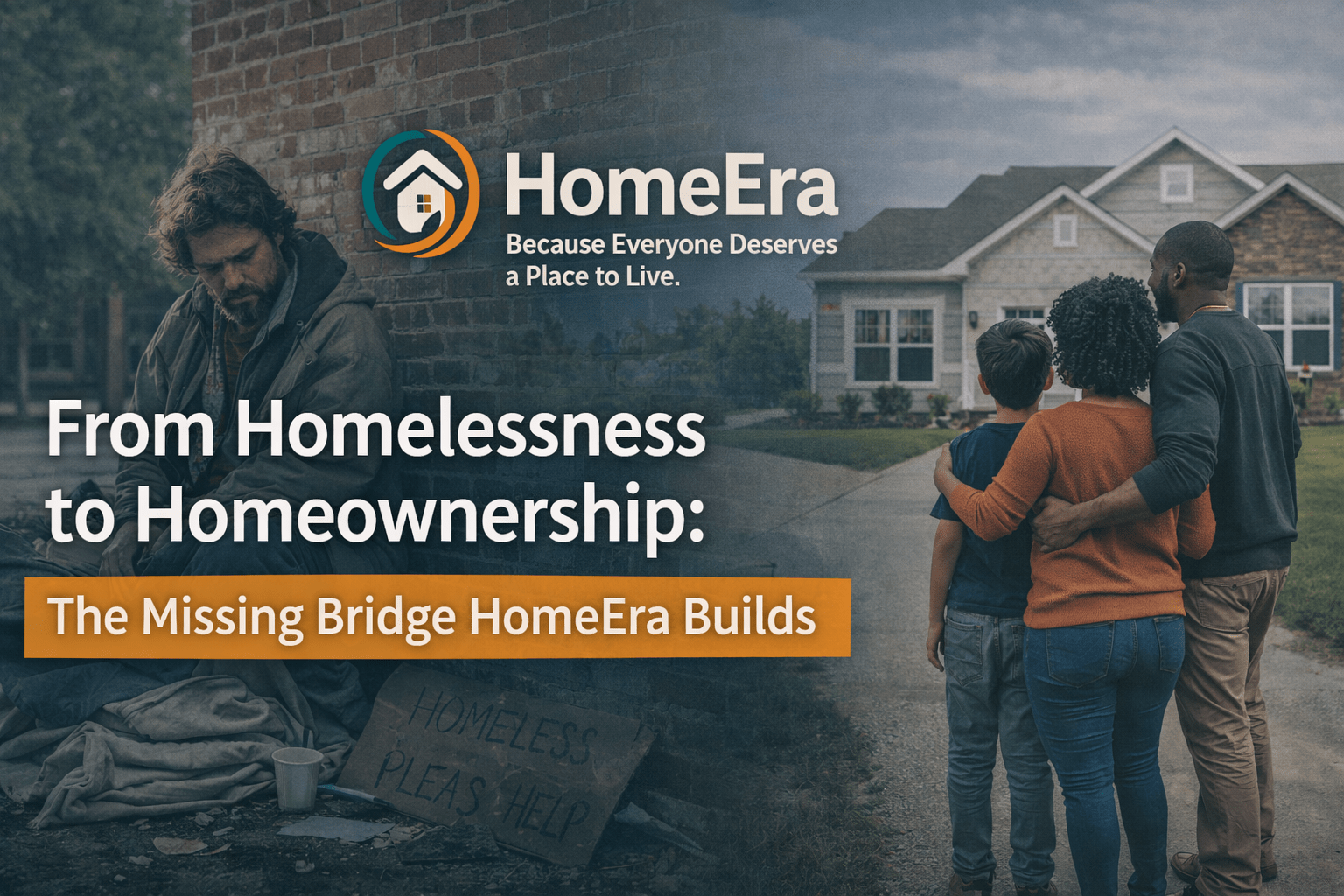
From Homelessness to Homeownership: The Missing Bridge HomeEra Builds
Connecticut does not lack compassion, funding, or housing-related programs. What it lacks is a durable bridge—one that reliably moves people from instability to permanence without collapsing under bureaucracy, misaligned incentives, or short-term thinking.
Homelessness and housing insecurity are often treated as isolated problems. In reality, they are symptoms of a broken transition system. People do not fail because housing is unavailable; they fail because there is no coordinated pathway from crisis to stability to ownership.
HomeEra™ was built to be that missing bridge.
The Gap Between Emergency Housing and Long-Term Stability
Most housing systems focus on the extremes:
- Emergency response: shelters, short-term vouchers, crisis placements
- End-state outcomes: homeownership programs, mortgages, and long-term rentals
What’s missing is the middle layer—the operational phase where people stabilize income, rebuild credit, establish rental history, and transition into durable housing without being reset by every disruption.
This middle layer is where most individuals and families fall through the cracks.
- Shelters are temporary and overstretched
- Transitional housing is limited and often time-boxed
- Homeownership programs assume readiness that many households have not yet reached
- Small landlords lack the resources to support higher-risk transitions
Without a coordinated operator, people cycle between instability and short-term fixes.
Why the Market Doesn’t Solve This on Its Own
Traditional market players are not designed for transitional housing execution.
- Realtors facilitate transactions, not long-term outcomes
- Property managers manage units, not human pathways
- Investors optimize returns, often avoiding perceived risk
- Public agencies are constrained by process, funding cycles, and mandates
Each plays a role—but none are structured to own the full transition lifecycle from housing insecurity to permanence.
That lifecycle requires:
- Acquisition discipline
- Operational patience
- Risk-managed tenancy
- Capital reserves
- Long-term ownership intent
HomeEra™ is built around those requirements.
HomeEra’s Bridge Model: Execution, Not Promises
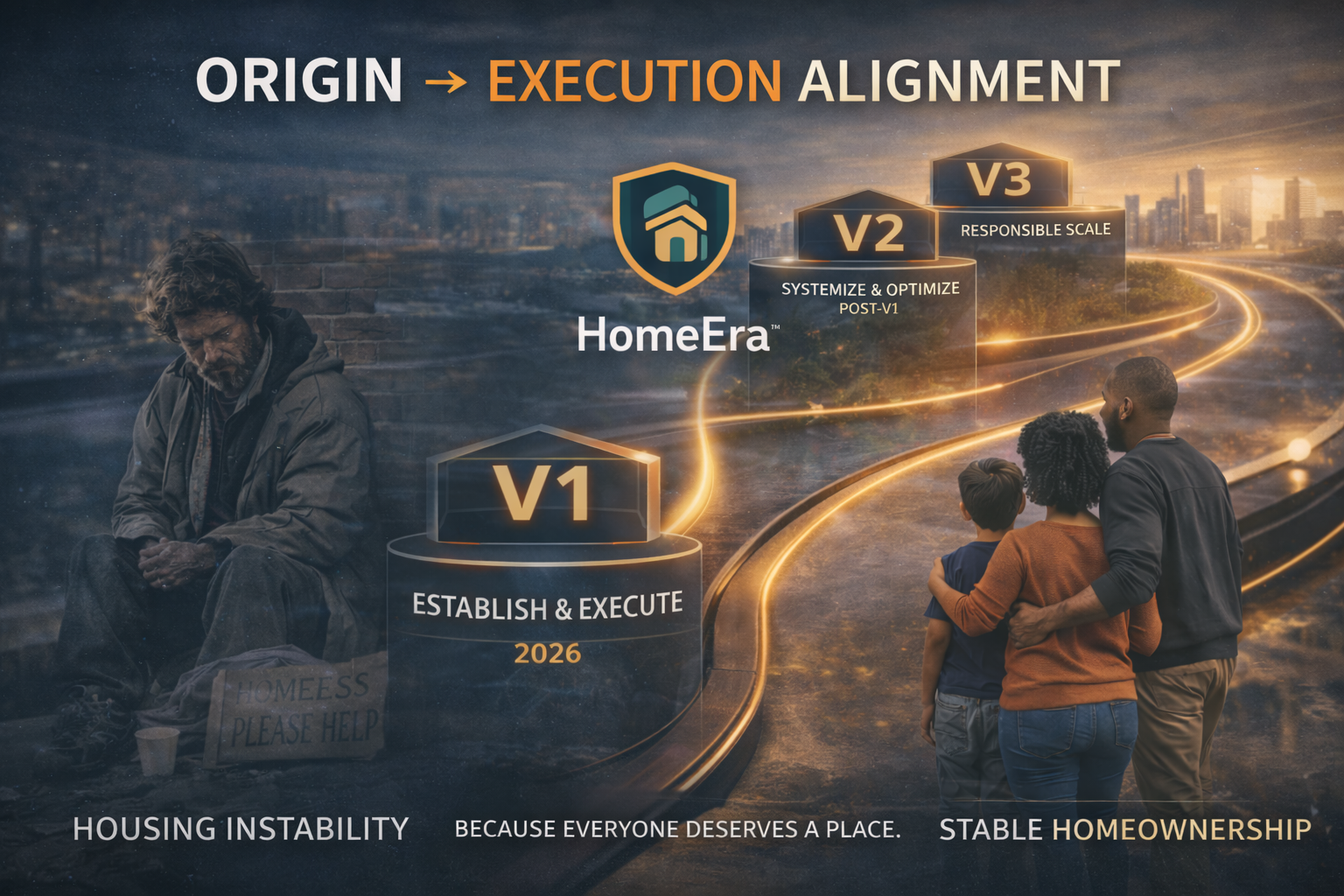
HomeEra™ operates as a housing operator, not a program administrator or a broker. The focus is on controlled execution across stages of housing stability.
Stage 1: Stabilization Through Real Units
HomeEra acquires and stabilizes real housing—primarily 1–4 unit homes and small multifamily buildings. These properties form the physical backbone of the bridge.
Stability begins with:
- Safe, code-compliant units
- Predictable rent structures
- Responsive maintenance
- Clear expectations for tenants and owners
This is not emergency housing. It is durable housing with structure.
Stage 2: Transitional Tenancy With Accountability
For households emerging from homelessness or severe instability, the challenge is not just access—it is consistency.
HomeEra’s model supports:
- Verified rental history
- Structured tenancy agreements
- Clear behavioral and financial expectations
- Coordination with support partners where appropriate
This creates a record of stability that traditional systems require but rarely help people build.
Stage 3: Pathways to Permanence
Stability is not the end goal—durability is.
As households demonstrate consistency, HomeEra helps position them for:
- Long-term rentals
- Program-based homeownership opportunities
- Market-rate ownership readiness
Because HomeEra operates with long-term ownership in mind, transitions are planned—not rushed or improvised.
Why This Bridge Is Sustainable
HomeEra’s model works because it aligns incentives that are usually in conflict.
- Residents gain stability and a real pathway forward
- Lenders see disciplined underwriting, reserves, and performance
- Communities gain stabilized properties and reduced displacement
- Investors participate in cash-flowing, responsibly managed assets
- Partners work with a single accountable operator
This is not charity housing.
It is execution-driven housing.
Why Timing Matters Now
Housing instability in Connecticut is accelerating due to:
- Rising rents
- Aging housing stock
- Small landlord burnout
- Insurance and tax pressure
- Limited new construction
At the same time, lenders and municipalities are demanding better operators, not more promises.
HomeEra™ is launching at a moment when:
- Transitional execution matters more than new policy
- Small multifamily is critical infrastructure
- Modular and repeatable housing models are becoming necessary
The bridge is no longer optional. It is overdue.
Conclusion
Homelessness is not solved by a single program or a single transaction. It is solved by continuity—a system that holds people steady long enough for stability to become permanence.
HomeEra™ exists to build that continuity.
Not with slogans.
Not with temporary fixes.
But with disciplined ownership, accountable operations, and housing that lasts.
Call to Action
If you are a:
- Housing partner seeking execution capacity
- Property owner ready for a responsible transition
- Lender or investor prioritizing durable outcomes
- Organization working upstream or downstream of housing insecurity
HomeEra™ is ready to build the bridge—together.
Visit homeera.org to start the conversation.